
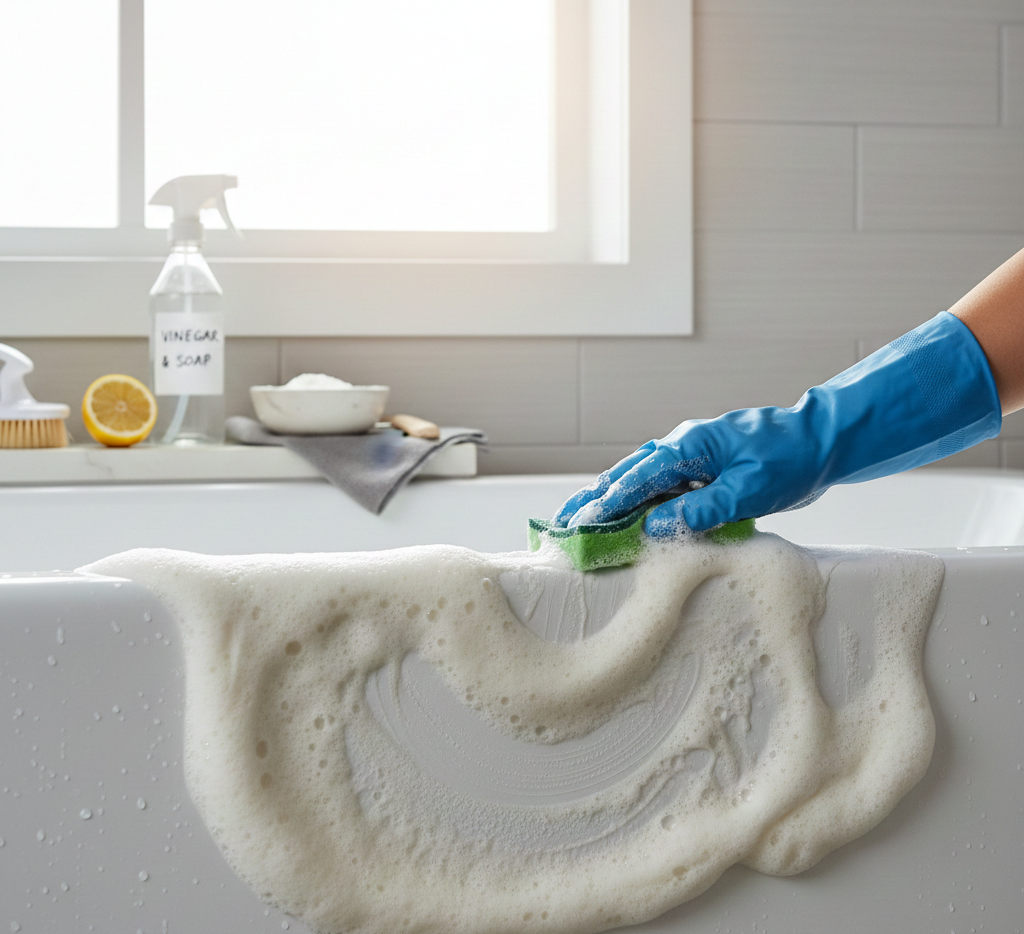
How to Remove Soap Scum From a Bathtub: 3 Easy & Effective Ways
Stubborn soap scum can turn a relaxing bathtub into a gritty eyesore. This chalky residue forms when minerals in hard water mix with body oils. As a result, it clings to surfaces like a magnet and hardens over time. You might feel frustrated by those stubborn grey streaks. However, you can restore that sparkling shine with the right ingredients.
The Science Behind the Scum
Soap scum acts more like a solid wax than a simple stain. Furthermore, it ignores basic water rinsing and resists many mild cleaners. Hard water contains calcium and magnesium. Specifically, these minerals react with your bar soap to create an insoluble curd. Consequently, you need acidic or abrasive agents to break those chemical bonds.
Essential Supplies for Success
Gather your tools before you start scrubbing. Fortunately, you likely already have most of these items in your kitchen.
- White distilled vinegar (your primary acid)
- Dish soap (to cut through body oils)
- Baking soda (for gentle abrasion)
- A spray bottle
- A non-scratch scrubbing pad
Method 1: The Powerful Vinegar and Dish Soap Spray
Vinegar dissolves mineral deposits quickly. Meanwhile, dish soap lifts away greasy films. This combination creates a potent cleaning solution for most tubs.
Mix Your Solution
First, pour equal parts white vinegar and water into your spray bottle. Then, add one tablespoon of grease-cutting dish soap. Next, shake the bottle gently to incorporate the ingredients.
Apply the Cleaner
Now, spray the entire surface of your bathtub generously. In addition, focus on the thickest layers near the water line. Afterward, let the solution sit for at least fifteen minutes. Because of this wait, the acid can eat through the crust effectively.
Scrub and Rinse
Finally, use your non-scratch pad to wipe the walls in a circular motion. Indeed, you will see the grey film slide right off the porcelain. Once finished, rinse the tub with warm water to reveal the bright surface.
Method 2: The Baking Soda Paste for Heavy Buildup
Sometimes, soap scum layers become too thick for liquids alone. In those cases, you need a physical abrasive. Baking soda provides grit without scratching your tub’s finish.
Create the Paste
To begin, mix baking soda with small amounts of water in a bowl. Aim for a consistency similar to toothpaste. Alternatively, swap the water for hydrogen peroxide for extra whitening power.
Target the Trouble Spots
Next, apply the paste directly onto the stubborn patches of scum. Similarly, ensure you cover every discolored area. Then, let the mixture dry for about twenty minutes. During this time, the paste draws out the trapped oils.
Work the Surface
Later, scrub the area with a damp sponge or a stiff-bristle brush. Furthermore, apply firm pressure to break up the hardened chunks. Ultimately, rinse the tub thoroughly with the showerhead.
Method 3: Handling Specialized Tub Materials
Different bathtub materials require specific care. Therefore, you must identify your tub type before applying cleaners.
Acrylic and Fiberglass Tubs
Notably, these tubs scratch very easily. Because of this, avoid using steel wool or harsh scouring powders. Instead, stick to the vinegar spray or a very liquidy baking soda slurry.
Porcelain and Cast Iron
On the other hand, these surfaces are much tougher. Consequently, you can use more vigorous scrubbing techniques. For instance, pumice stones can work on porcelain if the surface stays wet.
How to Prevent Soap Scum from Returning
Consistency is the secret to a permanently clean bathroom. By following these tips, you can stop scum before it settles.
Switch to Liquid Soap
Bar soaps contain the fats that react with minerals. Conversely, liquid body washes do not create the same chemical reaction. By switching, you will reduce buildup by eighty percent.
Wipe It Down Daily
Additionally, keep a small squeegee or a microfiber towel near the shower. Simply dry the tub walls after every single use. Therefore, minerals never have the chance to dry.
Advanced Tips for the Toughest Stains
If your tub still looks dull, try these professional tricks.
Use Heat
First, warm up your vinegar in the microwave before mixing it. In fact, heat accelerates the chemical reaction. Consequently, the scum dissolves twice as fast.
Lemon Power
Likewise, lemons provide natural citric acid and a fresh scent. For example, rub a halved lemon over your metal fixtures. In addition, the scent hides the pungent smell of vinegar.
Final Thoughts on a Sparkling Tub
Cleaning soap scum does not have to be a miserable chore. Essentially, you simply need to understand the chemistry. By using acids and abrasives, you can lift any stain. Eventually, your bathtub will look brand new again.
In conclusion, maintaining a clean tub improves your home’s hygiene. Moreover, it enhances your personal relaxation. Above all, that feeling makes the scrubbing effort entirely worth it.
Leave a Reply