
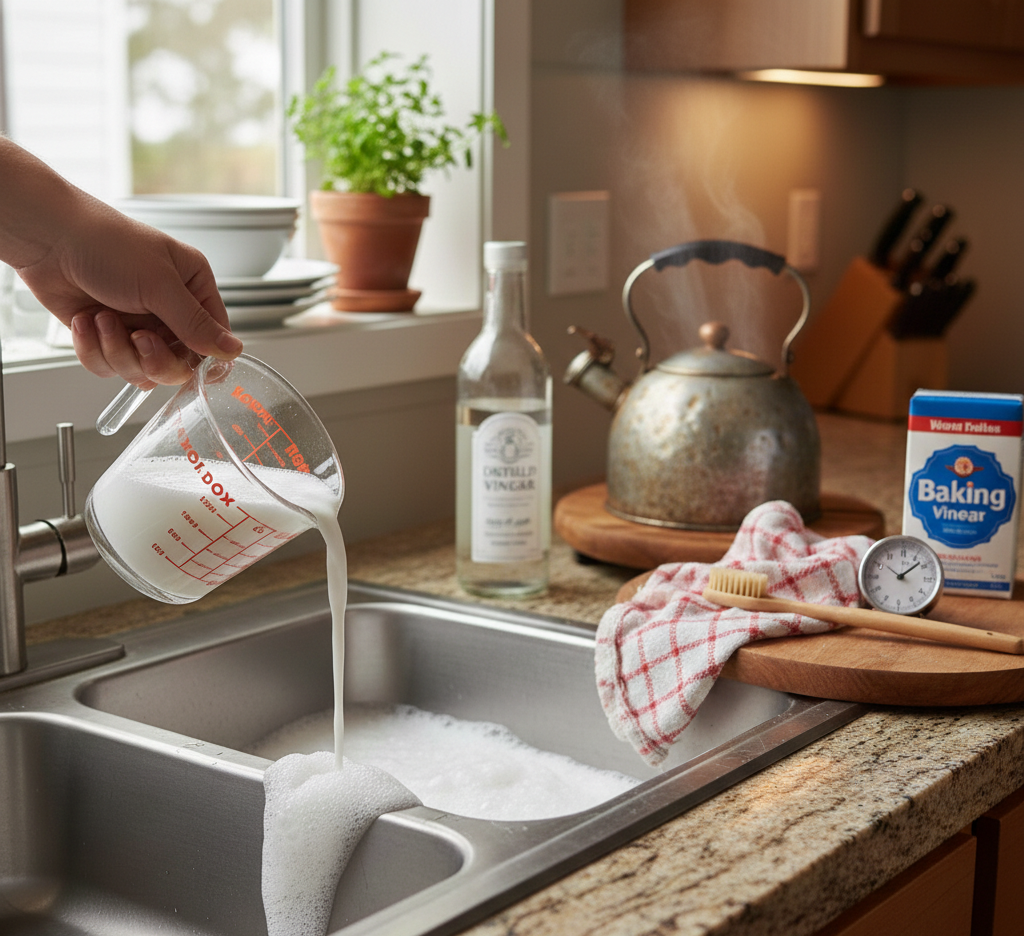
How to Unclog a Sink with Baking Soda and Vinegar: A Simple 6-Step Guide
You stand at your kitchen sink after a long day. Then, you turn on the faucet to rinse a glass. Suddenly, you notice the water pooling at the bottom. The drain gurgles back at you. Most homeowners face this annoying problem at least once. Therefore, you might reach for a bottle of harsh chemical cleaner. Please put that bottle back under the sink immediately. Those chemicals damage your pipes and hurt the environment. Fortunately, you already have the perfect solution in your pantry. Baking soda and vinegar offer a safe, effective, and cheap alternative.
Why Use Baking Soda and Vinegar?
Chemical drain cleaners contain lye or sulfuric acid. These substances create intense heat to melt away clogs. Unfortunately, that heat can warp PVC pipes over time. It also poses a serious risk to your skin and eyes. Using baking soda and vinegar avoids these scary hazards entirely.
This duo works through a simple chemical reaction. Specifically, baking soda serves as a base. Vinegar acts as a mild acetic acid. When you combine them, they create carbon dioxide gas. This gas bubbles and expands inside the drain. Consequently, this physical pressure breaks apart hair, grease, and soap scum. It acts like a tiny, bubbling jackhammer for your plumbing.
Gather Your Supplies
Preparation makes the process much smoother. For example, you do not want to hunt for supplies while your sink overflows. Collect these items before you begin the project:
- One cup of fresh baking soda
- One cup of white distilled vinegar
- A kettle of boiling water
- A drain plug or a damp rag
- An old toothbrush for scrubbing
Step 1: Prepare the Sink
First, remove any standing water from the sink basin. The mixture needs direct contact with the drain opening. Use a small cup to bail out the excess water. Afterward, wipe away any visible debris from the metal strainer. If you have a pop-up stopper, remove it now. You want a clear path for the powder to travel downward.
Step 2: Flush with Boiling Water
Start the process by boiling a full kettle of water. Carefully pour the boiling water directly down the drain. This step softens any hardened grease or soap residue. Hot water prepares the pipes for the chemical reaction. Let the pipes sit for a minute after pouring.
Step 3: Add the Baking Soda
Measure out exactly one cup of baking soda. Pour the powder directly into the drain opening. You might need a funnel if the opening is small. Ensure the baking soda falls deep into the pipe. Use a spoon to push it down if it clumps at the top. This powder serves as the foundation for your cleaning power.
Step 4: Add the Vinegar
Now, prepare for the exciting part of the process. Pour one cup of white vinegar down the drain. You will hear an immediate fizzing sound. This reaction creates the pressure needed to move the clog. Immediately cover the drain with a plug or a rag. You want to trap the bubbles inside the pipe. This forces the pressure downward toward the blockage instead of upward.
Step 5: Wait for the Magic
Set a timer for at least fifteen minutes. For stubborn clogs, let the mixture sit for thirty minutes. The bubbles will work through the layers of grime during this time. Resistance inside the pipe will slowly weaken. Use this time to wipe down your faucet or counters.
Step 6: The Final Flush
Boil another kettle of water while you wait. Once the timer finishes, remove the drain plug. Pour the boiling water down the drain one more time. This flush sweeps away the loosened debris and the remaining vinegar. Watch the water flow to check your progress. If the water spirals down quickly, you have succeeded!
What if the Clog Persists?
Sometimes, a single treatment does not finish the job. Very deep clogs might require a second attempt. Simply repeat the steps exactly as described above. Additionally, you can try using a plunger after the vinegar soak. The chemical reaction loosens the material, making plunging much more effective.
If the sink still drains slowly, consider a mechanical solution. A zip-it tool or a small hand auger can reach deeper hair clogs. However, baking soda and vinegar usually solve most kitchen grease issues.
Tips for Prevention
Maintaining a clear drain is easier than fixing a clog. Follow these simple rules to keep your pipes flowing:
- Never pour grease down the drain. Grease solidifies as it cools and traps other debris.
- Use a drain strainer. These inexpensive mesh tools catch hair and food particles easily.
- Flush with hot water weekly. Pouring boiling water down your sink once a week prevents buildup.
- Use baking soda monthly. A quick monthly refresh keeps your kitchen smelling clean.
Understanding the Science
Why does this specific combination work so well? The reaction follows this formula:
$$NaHCO_{3} + CH_{3}COOH \rightarrow CH_{3}COONa + H_{2}O + CO_{2}$$
The $CO_{2}$ gas creates the mechanical action. This gas expands rapidly within the confined space of your plumbing. Furthermore, the sodium acetate and water wash away safely. You are left with clean pipes and a fresh scent. Vinegar also kills many types of mold and bacteria. This helps eliminate those sour smells often found in kitchen sinks.
Environmental Benefits
Choosing natural cleaners protects our local water systems. Chemical cleaners eventually reach the ocean or groundwater. They can harm fish and disrupt delicate aquatic ecosystems. Baking soda and vinegar are biodegradable and completely non-toxic. They are safe for homes with curious pets or small children. You save money while you save the planet.
Final Thoughts
You now possess the knowledge to handle minor plumbing issues. You do not need a professional plumber for every slow drain. Moreover, you do not need dangerous chemicals that burn your lungs. Just reach for the simple ingredients in your kitchen cabinet. This method works for bathroom sinks, tubs, and kitchen basins. It provides a sense of pride to fix things yourself.
Keep your kettle ready and your pantry stocked. A clear drain is only a few bubbles away. Your pipes will thank you for the gentle treatment. Your wallet will thank you for the savings. Happy cleaning!
Leave a Reply