
How to Clean Windows Without Streaks: The Ultimate Professional Guide
Everyone loves a bright, sunlit room. However, dirty windows ruin that beautiful aesthetic. You see the dust and grime every single day. Consequently, you decide to clean them yourself. You grab a spray bottle and some paper towels. Surprisingly, the glass looks worse after you finish. You see white lines and blurry circles everywhere. Therefore, you need a better strategy.
Streaks happen for several specific reasons. First, you might use the wrong tools. Second, your cleaning solution might dry too quickly. Third, you probably leave behind tiny fibers. This guide changes everything for you today. You will learn the professional secrets of glass cleaning. Specifically, we will focus on speed and clarity.
Why Your Windows Look Smeary
Most people blame their cleaning spray. However, the technique usually causes the most trouble. For instance, paper towels often cause static electricity. This static attracts dust back to the glass immediately. Additionally, paper towels simply move the dirt around. They do not lift the grime away from the surface.
Furthermore, the weather plays a massive role in your success. Never clean your windows in direct sunlight. The sun heats the glass surface significantly. Consequently, your cleaning solution evaporates before you can wipe it. This leaves behind a concentrated residue of soap. Therefore, you see those annoying white streaks. Instead, wait for a cloudy or cool day.
The Essential Tool Kit
You do not need expensive machines for this task. However, you do need the right manual tools. First, buy a professional-grade squeegee. Look for one with a replaceable rubber blade. A sharp blade ensures a clean sweep every time. Additionally, find a high-quality microfiber scrubber. This tool holds plenty of water and loosens grit.
Next, ditch the paper towels for good. Instead, use clean microfiber cloths. These cloths feature a unique “hook” shape in their fibers. Consequently, they trap dirt rather than spreading it. You also need a dedicated bucket for your solution. Furthermore, keep a small detailing cloth handy for the edges. Finally, consider a sturdy ladder for high spots.
Pro Tip: Always check your squeegee blade for nicks. A tiny tear in the rubber leaves a line.
Crafting the Perfect Cleaning Solution
Many commercial sprays contain heavy waxes or perfumes. These ingredients smell nice but cause streaks. Alternatively, you can make a superior solution at home. Start with two gallons of warm water. Next, add one teaspoon of liquid dish soap. Specifically, look for a soap that cuts grease well.
Additionally, many professionals add a splash of white vinegar. Vinegar acts as a mild acid. Therefore, it breaks down tough mineral deposits and bird droppings. However, do not use too much soap. Excessive suds create a sticky film on the glass. This film attracts new dust within hours. Surprisingly, less soap leads to better results.
The Master Technique: Step by Step
Now, let’s start the actual cleaning process. First, dip your scrubber into the soapy water. Squeeze out the excess liquid to avoid a mess. Subsequently, apply the scrubber to the entire window surface. Use circular motions to agitate the dirt. Pay close attention to the corners and the frames.
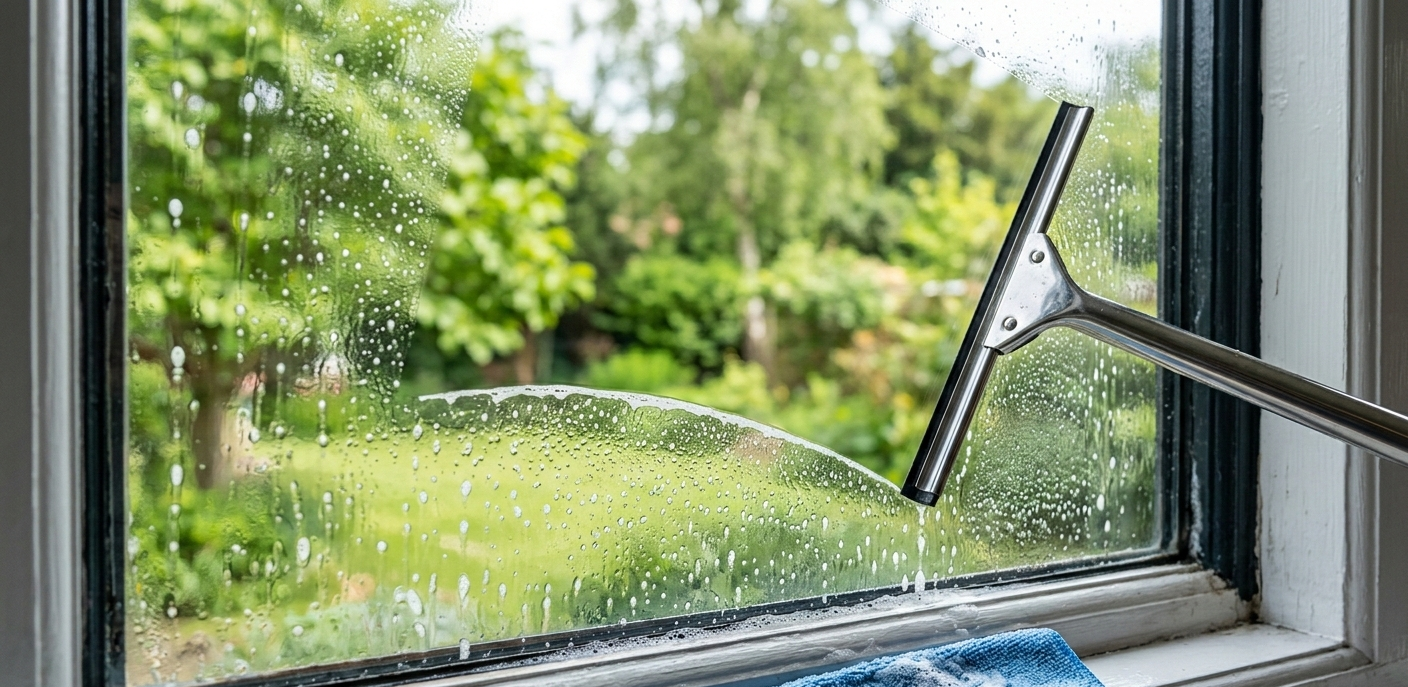
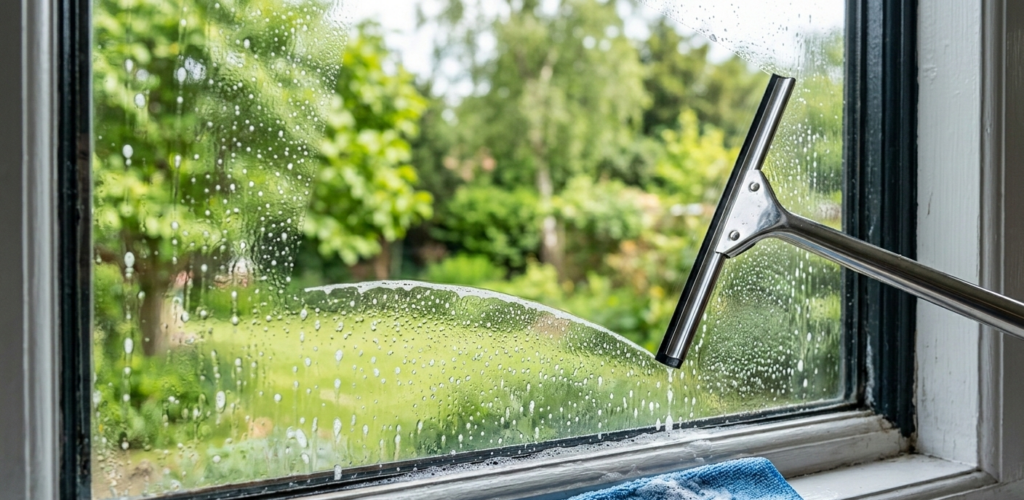
Next, prepare your squeegee for the first pass. Use a dry cloth to wipe the top edge. This creates a dry starting point for your tool. Consequently, the water will not drip down later. Now, place the squeegee at the top corner. Pull the blade across the glass horizontally. Alternatively, you can use a vertical motion.
After each stroke, wipe the squeegee blade. This step remains absolutely vital for success. If the blade stays wet, it leaves a streak. Therefore, use a clean rag for every wipe. Overlap each stroke by about one inch. This ensures you do not miss any spots. Finally, use your dry microfiber cloth for the perimeter.
Dealing with Stubborn Grime
Sometimes, soap and water are not enough. For example, you might find dried paint or stickers. Do not scrub these with your squeegee blade. Instead, use a new stainless-steel razor blade. First, wet the glass thoroughly with your solution. Then, push the razor forward at a shallow angle.
However, never use a razor on dry glass. You will scratch the surface permanently. Furthermore, avoid using razors on tempered or coated glass. Always test a small, hidden area first. Additionally, for oily smudges, use a bit of rubbing alcohol. This solvent dissolves oils quickly and evaporates cleanly.
Don’t Forget the Frames and Screens
Clean glass looks bad next to dirty frames. Therefore, wipe the window tracks first. Use a vacuum to remove loose bugs and dust. Subsequently, use a damp cloth to clean the sills. If the tracks are very dirty, use an old toothbrush. This helps you reach into the tight crevices.
Additionally, your screens need attention once a year. Remove them and spray them with a hose. Use a soft brush to remove pollen and soot. Consequently, your windows will stay clean much longer. If you leave the screens dirty, rain will splash grime back onto the glass. Finally, let the screens dry completely before reinstalling them.
The Secret of Microfiber Buffing
Occasionally, you might see a tiny “ghost” streak. Do not panic or rewash the whole pane. Instead, use a completely dry microfiber cloth. Buff the area with light, quick strokes. The friction creates a small amount of heat. This heat evaporates the remaining moisture instantly. Consequently, the streak disappears like magic.
However, make sure the cloth is truly clean. Even a little bit of grease will ruin the finish. Wash your microfiber cloths without fabric softener. Fabric softener coats the fibers in oil. Therefore, it reduces the cloth’s ability to absorb water. Use a dedicated microfiber detergent if possible.
Maintaining Your Clear View
You should clean your windows twice a year. Typically, spring and fall are the best seasons. During these times, the temperature remains mild. Therefore, your solution behaves predictably on the glass. Additionally, you will catch any damage to your seals early.
Ultimately, clean windows improve your mood. They connect your indoor space to the outdoors. You will notice the difference every morning. Follow these steps, and you will save money. You do not need a professional crew. You just need the right technique and patience.
Enjoy your sparkling, streak-free view today. You earned it with your hard work.
Leave a Reply