
How to Clean a Top-Load Washing Machine: The Ultimate Deep Cleaning Guide
The Ultimate Guide to Cleaning Your Top-Load Washer
You likely use your washing machine every single week. You trust it to scrub away dirt, sweat, and stains. However, most people forget one crucial fact. Your washer needs a deep clean too. Over time, soap scum and mineral deposits build up inside the drum. Bacteria thrive in these damp, dark crevices. This leads to funky odors and dingy clothes.
Cleaning a top-load washer differs significantly from cleaning a front-loader. You have more water to work with but also more hidden spots. Follow this guide to make your machine sparkle like new again.
Why Your Washer Gets Gross
First, you must understand the enemy. Traditional top-loaders use a lot of water. Even so, modern high-efficiency (HE) detergents often leave a thin film behind. This residue acts like glue for lint and body oils. Eventually, this mixture turns into a grey sludge called “scrud.”
Furthermore, hard water creates calcium scales on the outer tub. You cannot see these deposits, but they trap foul smells. If your laundry smells sour, your machine is definitely dirty. You should aim to clean it every thirty days for the best results.
Gather Your Cleaning Supplies
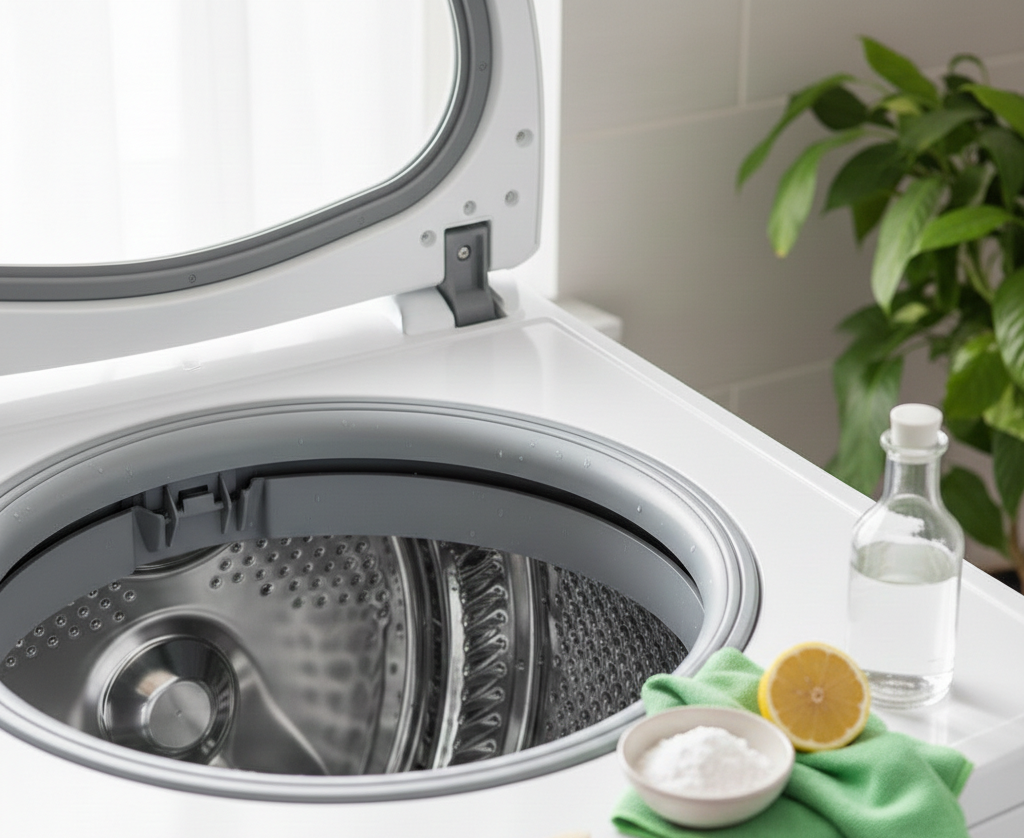
You do not need expensive, specialized chemicals for this task. In fact, natural ingredients often work better than harsh store-bought foams. Gather these items before you begin:
- White Vinegar: This acid breaks down mineral scales and cuts through grease.
- Baking Soda: This alkaline powder deodorizes the drum and scrubs away stains.
- Microfiber Cloths: Use these to wipe down surfaces without leaving lint.
- An Old Toothbrush: This tool reaches into tiny cracks and around the agitator.
- Dish Soap: This helps remove stubborn grime from the exterior.
Step 1: The Deep Soak with Vinegar
Start by emptying your washing machine completely. Check for stray socks or loose change in the bottom. Next, set your washer to the highest water level possible. Select the hottest temperature setting available on your dial.
Once the tub fills with hot water, add four cups of white vinegar. Close the lid and let the machine agitate for one minute. This step mixes the vinegar thoroughly into the water. Afterward, lift the lid to pause the cycle.
Now, let the mixture sit for a full hour. This soak time is vital. The vinegar needs time to dissolve the hard water deposits. It also kills mold spores hiding in the outer drum. While the water sits, move on to the smaller parts.
Step 2: Tackle the Agitator and Dispensers
While the drum soaks, focus your attention on the details. Most top-loaders feature a central agitator. This part often has a removable cap on top. Pull this cap off to reveal the fabric softener dispenser.
Soak these removable parts in a sink filled with warm, soapy water. Use your old toothbrush to scrub away the waxy buildup. Fabric softener is notoriously sticky and grows mold quickly. Consequently, you must be thorough in this area.
Next, look at the bleach dispenser. Use a damp cloth to wipe out any crusty residue. If your machine has a lint filter, pull it out now. Rinse it under the tap to remove trapped hair and fibers.
Step 3: Scrub the Nooks and Crannies
The top rim of the tub stays dry during most cycles. Therefore, it collects a thick layer of dust and dried soap. Dip your toothbrush into the vinegar water from the drum. Scrub under the lip of the tub and around the hinges.
Additionally, pay close attention to the seal around the lid. Dirt often hides in the rubber gasket or plastic rim. Wipe these areas until the cloth comes away clean. Do not forget the control knobs and the exterior housing. A clean machine should look good on the outside too.
Step 4: Finish the First Cycle
Once the hour passes, close the lid. Allow the washer to complete the full agitation and spin cycle. The vinegar-water will flush away the loosened grime. You might see small black flakes in the water. Do not worry. These flakes are just old soap scum breaking loose.
Step 5: The Baking Soda Rinse
Vinegar handles the minerals, but baking soda tackles the odors. Start a second cycle with hot water and the highest load level. Add one cup of baking soda directly to the water.
Close the lid and let the machine run for another minute. Again, open the lid and let it soak for thirty minutes. This step neutralizes any remaining vinegar scent. It also provides a gentle abrasive action for the final rinse. Finally, let the cycle run to completion.
Step 6: The Final Wipe Down
After the second cycle finishes, leave the lid open. Take a clean, dry microfiber cloth and wipe the interior drum. Pay attention to the bottom where sediment might settle.
Leave the lid open for several hours or overnight. Air circulation is your best defense against future mold growth. A closed lid traps moisture and encourages bacteria to return.
Pro Tips for a Greener Clean
If you hate the smell of vinegar, add lemon juice. The citric acid provides extra cleaning power and a fresh scent. Alternatively, use essential oils like tea tree or lavender. These oils have natural antibacterial properties.
Furthermore, avoid using too much detergent in your daily loads. Most people use twice as much soap as they actually need. Excess soap creates the very buildup you just spent hours removing. Always follow the manufacturer’s guidelines for load size.
Maintaining Your Machine Every Week
You should not wait until the machine smells to clean it. Instead, incorporate small habits into your routine. Wipe the lid dry after your last load of the day. This simple act prevents water from sitting in the crevices.
Also, switch to powdered detergent occasionally. Powdered soaps often contain oxygen bleach, which keeps the drum brighter. If you prefer liquid, run an “Extra Rinse” cycle for heavy loads. This ensures all soap leaves the machine before the spin begins.
Finally, inspect your hoses once a year. Look for cracks or bulges that might lead to leaks. A clean washer is a safe washer.
Summary of the Process
Cleaning a top-loader is a straightforward process. You simply need time and the right ingredients. By using vinegar and baking soda, you save money. You also avoid pumping harsh chemicals into the water system.
| Step | Action | Main Ingredient |
| 1 | Hot Soak | 4 Cups Vinegar |
| 2 | Scrubbing | Toothbrush & Soap |
| 3 | Second Rinse | 1 Cup Baking Soda |
| 4 | Drying | Air & Microfiber |
Your clothes will look brighter after this deep clean. Also, your laundry room will smell much fresher as well. Most importantly, your washing machine will last much longer. Take care of your appliances, and they will take care of you.
Leave a Reply