How to Clean a Microfiber Couch: The Ultimate Stain Removal Guide
Master the Art of Cleaning Your Microfiber Couch
Microfiber couches offer incredible comfort and lasting durability. However, these pieces of furniture act like magnets for stubborn stains and pet hair. You might feel overwhelmed when a spill happens on your favorite seat. Do not panic because you can restore your sofa to its original glory. This guide shows you exactly how to deep clean microfiber without ruining the fabric.
Step 1: Decode the Care Label
Before you grab a bucket, you must find the manufacturer’s tag. This small piece of fabric usually hides under the cushions or the base. It contains vital codes that dictate your entire cleaning strategy.
- Code S: Clean this fabric only with water-free solvents or dry-cleaning products.
- Code W: Use water-based cleaning agents like mild soap and warm water.
- Code S-W: You can safely use either water or solvent-based cleaners on this piece.
- Code X: Avoid all liquid cleaners and stick strictly to vacuuming.
Ignoring these codes often leads to permanent water rings or damaged fibers. Consequently, you should always follow the tag’s specific instructions. If you cannot find a tag, test a tiny, hidden area first.
Step 2: Clear the Surface Debris
Begin your cleaning journey by removing everything from the couch. Toss the decorative pillows and blankets onto a clean surface. Next, use a high-powered vacuum with an upholstery attachment to suck up crumbs.
Pay close attention to the deep crevices between the cushions. Dirt acts like sandpaper on microfiber and wears down the material over time. Therefore, frequent vacuuming extends the life of your furniture significantly. Additionally, use a lint roller for any stubborn pet hair that the vacuum missed.
Step 3: Tackle Stains with the Right Solution
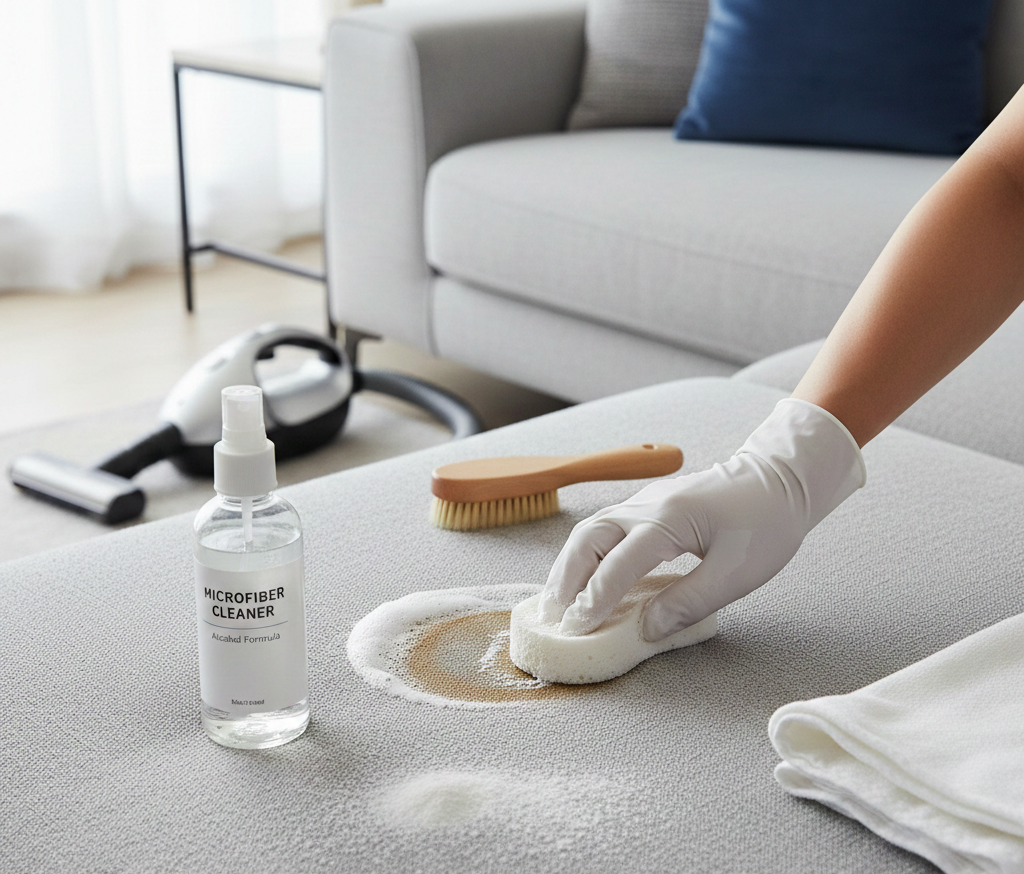
Now, you must address the visible spots and spills. Most microfiber couches respond well to rubbing alcohol because it evaporates quickly. This fast evaporation prevents those dreaded water marks from forming on the fabric.
- Fill a spray bottle with 70% isopropyl alcohol.
- Mist the stained area lightly until it feels damp.
- Rub the spot gently with a white or light-colored sponge.
- Use a circular motion to lift the dirt out of the fibers.
Why use a white sponge? Well, colorful sponges can transfer dye onto your light-colored couch. Moreover, avoid using too much liquid at once. A light misting usually does the trick for most everyday messes.
Step 4: Erase Water Rings
Perhaps you used water on a “Code S” couch by mistake. Now, you see a dark, stiff ring where the spill dried. Fortunately, you can often fix this with a little bit of effort.
Spray the ring lightly with more rubbing alcohol. Scrub the area vigorously with a clean, soft-bristled brush. As the alcohol dries, the ring should disappear into the fabric. Subsequently, the material might feel a bit stiff to the touch. Do not worry because we will fix the texture in a later step.
Step 5: Deodorize the Entire Piece
Couches often trap odors from pets, sweat, and food. You can freshen the entire sofa using simple baking soda. First, sprinkle a generous layer of baking soda over all the cushions. Let the powder sit for at least twenty minutes to absorb smells.
Afterward, vacuum the powder away using the brush attachment. This process neutralizes odors instead of just masking them with perfumes. Furthermore, baking soda helps loosen any remaining dry particles from the fabric. Your couch will smell fresh and look much brighter.
Step 6: Restore the Soft Texture
Microfiber often feels crunchy or stiff after it gets wet. This happens because the tiny fibers clump together during the drying process. You must “fluff” the fabric to bring back that signature softness.
Take a dry, soft-bristled brush or a clean kitchen sponge. Rub the dry fabric in small, gentle circles across the entire surface. This action separates the fibers and restores the original nap of the suede-like material. Consequently, your couch will feel as soft as the day you bought it.
Pro Tips for Long-Term Maintenance
- Act Fast: Clean spills immediately before they soak into the internal foam.
- Go White: Always use white cloths to prevent color bleeding onto the sofa.
- Avoid Heat: Never use a hair dryer or iron on microfiber fabric.
- Rotate Cushions: Flip your cushions weekly to ensure even wear and tear.
Consistent maintenance prevents dirt from becoming “set” in the delicate polyester fibers. Therefore, you should vacuum your couch at least once every two weeks. Similarly, treat small spots as soon as you notice them.
Why Choose Microfiber Anyway?
Many homeowners prefer microfiber because it resists staining better than cotton. The fibers are incredibly thin and tightly woven together. Because of this, liquids often bead up on the surface for a few seconds.
This window of time allows you to blot the liquid before it sinks in. Additionally, microfiber is very difficult for cats to snag with their claws. Thus, it remains the top choice for families with active pets and children.
Summary of the Process
| Action | Tool Needed | Purpose |
| Check Tag | Eyesight | Prevent permanent damage |
| Vacuum | Vacuum Cleaner | Remove abrasive dirt |
| Mist | Rubbing Alcohol | Dissolve oil and stains |
| Scrub | White Sponge | Lift grime from fibers |
| Refresh | Baking Soda | Eliminate trapped odors |
| Fluff | Soft Brush | Restore soft texture |
Cleaning your couch does not require expensive professional services. You simply need the right tools and a bit of patience. By following these steps, you protect your investment and keep your home beautiful. Now, you can relax on a couch that looks and smells brand new.
Leave a Reply