
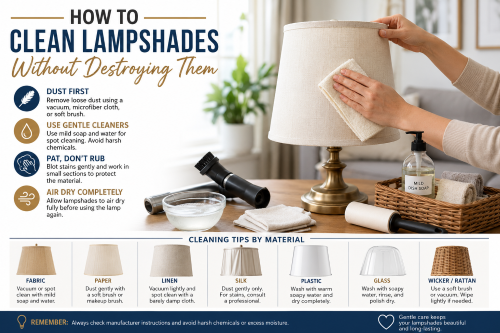
Lampshades collect more dust, pet hair, and airborne particles than many people realize. Because they sit close to light bulbs, they also attract grease, smoke residue, and grime over time. However, many homeowners hesitate to clean them because delicate fabrics, paper, and natural materials can become damaged if handled incorrectly.
Fortunately, you can clean most lampshades safely with the right techniques. Instead of scrubbing aggressively or soaking delicate materials, you should match your cleaning method to the shade’s material. As a result, your lampshades will stay clean, maintain their shape, and last much longer.
In this guide, you’ll learn how to clean lampshades without destroying them, which cleaning supplies work best, and which mistakes you should always avoid.
Why Regular Lampshade Cleaning Matters
Many people dust furniture every week but forget about their lampshades. Unfortunately, dust buildup does more than affect appearance.
Dirty lampshades can:
- Reduce the brightness of your lighting
- Trap allergens inside fabric fibers
- Create unpleasant odors
- Make rooms appear dull
- Shorten the lifespan of delicate materials
Therefore, cleaning your lampshades every few weeks keeps your lighting brighter while improving indoor air quality.
Gather Your Cleaning Supplies
Before you begin, collect a few gentle cleaning tools.
You’ll need:
- Microfiber cloth
- Soft lint roller
- Vacuum with a brush attachment
- Soft cosmetic or paintbrush
- Mild dish soap
- Warm water
- White cotton towel
- Soft sponge
- Dry microfiber towel
Additionally, keep harsh chemicals away from delicate lampshades because they may discolor or weaken the material.
Start by Removing Loose Dust
Every cleaning job should begin with dust removal.
First, unplug the lamp and allow the bulb to cool completely. Next, remove the lampshade if possible.
Then use one of these methods:
- Vacuum with a soft brush attachment
- Wipe gently with a microfiber cloth
- Roll a lint roller across fabric shades
- Brush textured surfaces with a soft paintbrush
Because dust acts like tiny sandpaper particles, removing it first prevents scratches during deeper cleaning.
How to Clean Fabric Lampshades
Fabric shades remain the most common option in homes. Luckily, they respond well to gentle cleaning.
For Light Dust
Use a microfiber cloth or vacuum brush attachment.
Work from the top toward the bottom.
Meanwhile, rotate the lampshade as you clean so you remove dust evenly.
For Small Stains
Mix:
- 2 cups warm water
- A few drops of mild dish soap
Dip a microfiber cloth into the solution.
Next, wring it out thoroughly.
Then blot the stain gently instead of rubbing it.
Finally, wipe away soap residue with another damp cloth and allow the shade to air dry completely.
How to Clean Paper Lampshades
Paper lampshades require extra care because moisture weakens paper fibers.
Instead of using water:
- Dust with a dry microfiber cloth
- Use a clean makeup brush
- Blow dust away with compressed air on a low setting
If you notice fingerprints, gently erase them with a white art gum eraser.
Never scrub paper shades because they tear easily.
Cleaning Linen Lampshades
Linen provides an elegant appearance, but it attracts dust quickly.
Fortunately, routine cleaning remains simple.
First, vacuum with the upholstery attachment.
Next, remove spots using a barely damp microfiber cloth.
Avoid soaking linen because excess water may leave rings or shrink the fabric.
Instead, clean one small section at a time.
How to Clean Silk Lampshades
Silk deserves the gentlest treatment.
Rather than washing it, dust it frequently with:
- A feather duster
- Soft cosmetic brush
- Microfiber cloth
If stains appear, consult a professional cleaner.
Because silk fibers weaken easily, DIY stain removal often creates permanent damage.
Cleaning Plastic Lampshades
Plastic shades offer the easiest cleaning experience.
Simply wash them using:
- Warm water
- Mild dish soap
- Soft sponge
Rinse thoroughly.
Then dry immediately with a microfiber towel.
Consequently, you’ll prevent water spots from forming.
Cleaning Glass Lampshades
Glass shades tolerate deeper cleaning.
Remove the shade first.
Next:
- Wash with warm soapy water.
- Rinse thoroughly.
- Dry completely using a lint free towel.
Afterward, polish the glass using a dry microfiber cloth for a streak free shine.
Cleaning Wicker, Bamboo, and Rattan Lampshades
Natural woven shades trap dust inside small openings.
Therefore, use:
- Soft paintbrush
- Vacuum brush attachment
- Compressed air
If necessary, wipe lightly with a barely damp cloth.
However, avoid saturating natural fibers because moisture may cause warping or mildew.
Remove Yellowing Carefully
Older white lampshades sometimes develop yellow discoloration.
Although many people reach for bleach, this often damages the material.
Instead:
- Dust thoroughly
- Spot clean gently
- Allow plenty of fresh air circulation
Unfortunately, severe yellowing caused by age usually cannot be reversed completely.
Nevertheless, regular cleaning slows further discoloration.
Eliminate Odors Naturally
Kitchen grease, cigarette smoke, and pet odors often settle inside fabric lampshades.
To freshen them:
Sprinkle a small amount of baking soda over the shade.
Allow it to sit for several hours.
Then vacuum it away carefully.
Alternatively, place the lampshade outdoors in a shaded, well ventilated area for a few hours.
Fresh air often removes mild odors naturally.
Avoid These Common Cleaning Mistakes
Many damaged lampshades result from simple cleaning errors.
Avoid these mistakes:
- Soaking fabric shades
- Using bleach
- Spraying cleaner directly onto the shade
- Scrubbing stains aggressively
- Using rough brushes
- Drying near high heat
- Ignoring manufacturer instructions
Instead, use gentle cleaning methods and work patiently.
As a result, your lampshades will maintain their original appearance.
How Often Should You Clean Lampshades?
Cleaning frequency depends on your home.
Use this schedule as a guide:
- Dust every 2–4 weeks
- Deep clean every 3–6 months
- Clean immediately after spills
- Increase cleaning if you have pets or allergies
Additionally, homes near busy roads may require more frequent dust removal.
Prevent Future Dust Buildup
Preventive care saves time and reduces deep cleaning.
Try these habits:
- Dust lamps during weekly cleaning
- Replace HVAC filters regularly
- Use an air purifier
- Keep windows closed during dusty days
- Vacuum nearby furniture frequently
Consequently, less dust settles on your lampshades.
Can You Wash Lampshades in Water?
The answer depends on the material.
Generally:
| Material | Safe With Water? |
|---|---|
| Fabric | Light spot cleaning only |
| Linen | Minimal moisture |
| Silk | No |
| Paper | No |
| Plastic | Yes |
| Glass | Yes |
| Metal | Yes |
| Bamboo | Slightly damp cloth only |
| Rattan | Slightly damp cloth only |
Always check the manufacturer’s care instructions before using water.
When Should You Replace a Lampshade?
Even careful cleaning cannot restore every lampshade.
Consider replacing yours if you notice:
- Torn fabric
- Broken frames
- Mold growth
- Permanent stains
- Severe yellowing
- Burn marks
- Warped materials
Replacing a worn lampshade often improves the entire appearance of a room.
Final Thoughts
Cleaning lampshades doesn’t have to feel risky. Instead, choosing the right method for each material helps preserve both appearance and durability. Whether your lampshade features fabric, paper, glass, linen, or woven natural fibers, gentle care delivers the best results.
Furthermore, regular dusting prevents heavy buildup, while prompt spot cleaning keeps stains from becoming permanent. By avoiding harsh chemicals, excessive moisture, and aggressive scrubbing, you can extend the life of your lampshades and keep your home looking bright and inviting.
With consistent maintenance and the proper cleaning techniques, your lampshades will continue to enhance your lighting and décor for years to come.
Leave a Reply