Stop! Can You Use Bleach on Quartz? | Essential Quartz Care Guide
The Short Answer: Put Down the Bleach
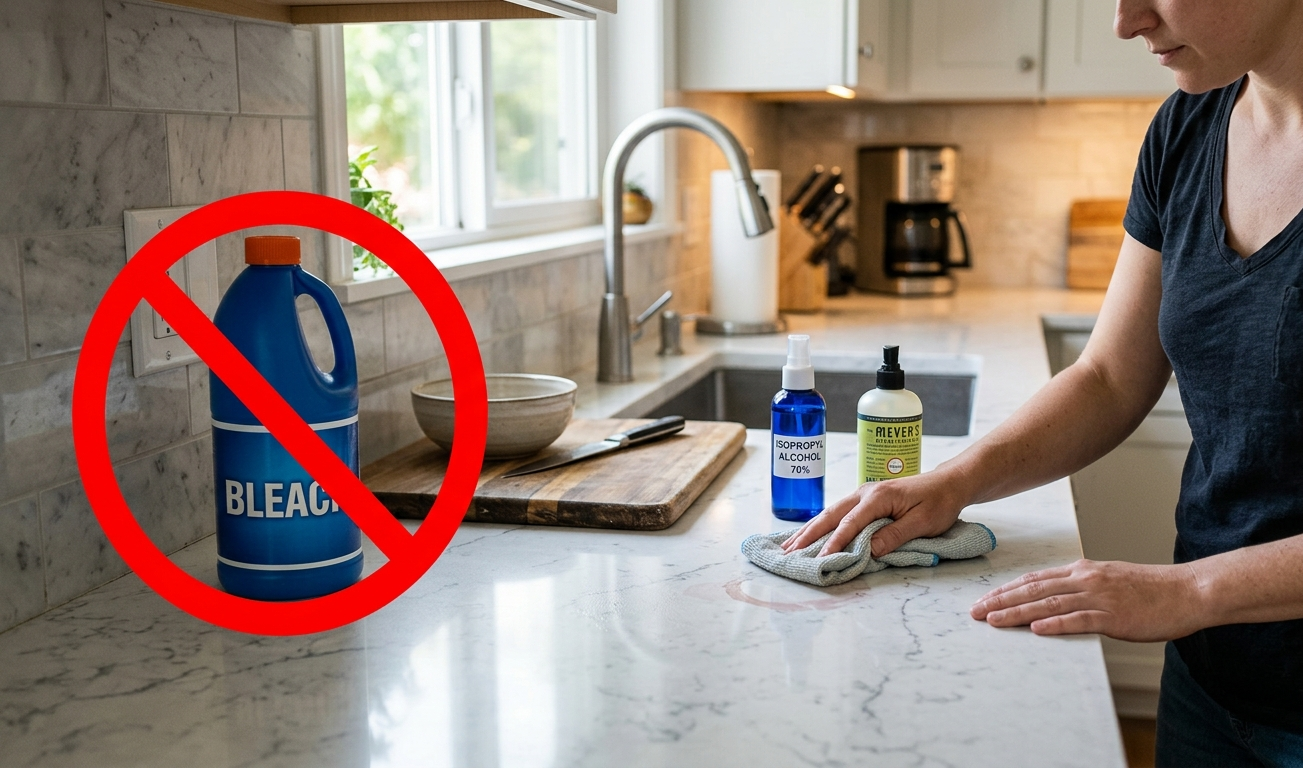
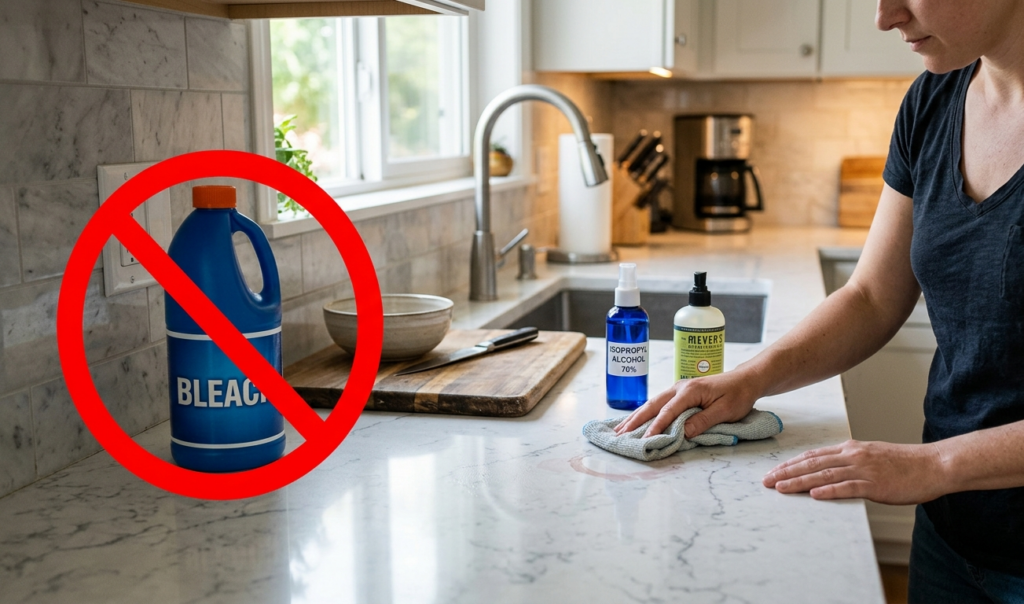
You might love the disinfecting power of bleach. It kills germs and brightens surfaces in seconds. However, you should never use bleach on your quartz countertops. In fact, quartz looks like natural stone but it behaves differently. Manufacturers engineer these slabs using crushed stone and resin binders. Consequently, bleach reacts poorly with those resins. You risk permanent damage every time you use it. Therefore, you must find safer alternatives for your home.
Why Bleach and Quartz Don’t Mix
Quartz surfaces aren’t just solid rock. Specifically, they contain about 10% polymer resins and pigments. These chemicals give the stone its color and strength. Unfortunately, bleach is a powerful oxidant. It aggressively attacks the chemical bonds in the resin. As a result, this reaction causes a permanent change in the material’s structure.
1. It Destroys the Finish
The glossy shine on your counters comes from the resin. Furthermore, bleach acts as a corrosive agent. It eats away at the polished surface. Ultimately, your counters will look dull and cloudy over time. You cannot simply buff this damage out later.
2. It Causes Permanent Discoloration
In addition, bleach often leaves behind yellow or white stains. It leaches the pigment right out of the slab. Consequently, this creates patchy, uneven spots across your kitchen. Once the color fades, it stays gone forever.
3. It Weakens the Structure
The resin acts like glue for the quartz crystals. Moreover, bleach makes this glue brittle. Your countertop might become more prone to chips or cracks. In short, you effectively trade a clean surface for a broken one.
Better Alternatives for Daily Cleaning
Fortunately, you don’t need harsh chemicals for a hygienic kitchen. Quartz is naturally non-porous. Because of this, bacteria cannot hide inside the surface. Therefore, mild cleaners work perfectly well for any mess.
- Dish Soap and Water: Use a few drops of mild soap. This setup cuts through grease easily.
- Isopropyl Alcohol: Mix 70% alcohol with water in a spray bottle. This kills germs without hurting the resin.
- Dedicated Quartz Cleaners: Alternatively, buy products specifically made for engineered stone. These formulas maintain the pH balance of your counters.
How to Handle Tough Stains Without Bleach
Sometimes, soap and water won’t cut it. You might spill wine or drop permanent marker. Even then, stay away from the bleach bottle. Instead, follow these steps to save your stone.
Use a Plastic Scraper
Dried food often sticks to the surface. However, avoid using metal blades or steel wool. These items will scratch the polish. By comparison, a plastic putty knife lifts the debris gently.
Try Denatured Alcohol
Rub a small amount of alcohol onto the stain. Next, let it sit for one minute. Wipe it away with a soft microfiber cloth. Essentially, this method removes ink and adhesive residue safely.
Apply an Adhesive Remover
Products like Goo Gone work wonders on sticky messes. First, apply a small amount to the spot. Then, rinse the area thoroughly with fresh water.
Protecting Your Long-Term Investment
Ultimately, quartz countertops cost a significant amount of money. Naturally, you want them to last for decades. To achieve this, proper maintenance ensures they stay beautiful. Furthermore, avoid these common mistakes to keep your kitchen pristine.
Skip the Scrubbing Pads
For starters, green scouring pads contain abrasive minerals. In effect, they act like sandpaper on your quartz. Instead, stick to soft sponges or washcloths. This choice prevents micro-scratches from dulling the surface.
Use Trivets for Heat
Additionally, the resin in quartz can melt. Because of this, never place hot pans directly on the surface. In fact, heat causes the same type of “burn” as bleach. To prevent this, always use a heat pad or a wooden board.
Avoid High pH Cleaners
Similarly, bleach isn’t the only enemy. For instance, oven cleaners and drain openers are also dangerous. In short, these highly alkaline products cause chemical burns on the stone. If a spill occurs, wipe it up immediately with clean water.
Summary of Best Practices
In summary, keeping quartz clean requires very little effort. To be successful, you just need to choose the right tools. Review the table below for a quick guide.
| Do This | Avoid This |
| Use microfiber cloths | Use steel wool |
| Use mild dish soap | Use bleach or ammonia |
| Use cutting boards | Cut directly on the stone |
| Use coasters for drinks | Leave spills overnight |
The Verdict on Disinfection
Admittedly, many homeowners worry about germs. However, you can sanitize quartz without using bleach. As mentioned earlier, a simple mix of alcohol and water works wonders. Furthermore, some quartz brands include antimicrobial technology. This feature helps inhibit the growth of mold and mildew naturally. Therefore, you do not need to resort to corrosive chemicals for safety.
Final Thoughts
To conclude, bleach belongs in the laundry room, not the kitchen. As we have seen, it provides a false sense of cleanliness. Simultaneously, it destroys the integrity of your home. Instead, protect your engineered stone with gentle care. By choosing pH-neutral cleaners, your countertops will keep their shine for years. In the end, your quartz will look as good as the day of installation.
Leave a Reply