
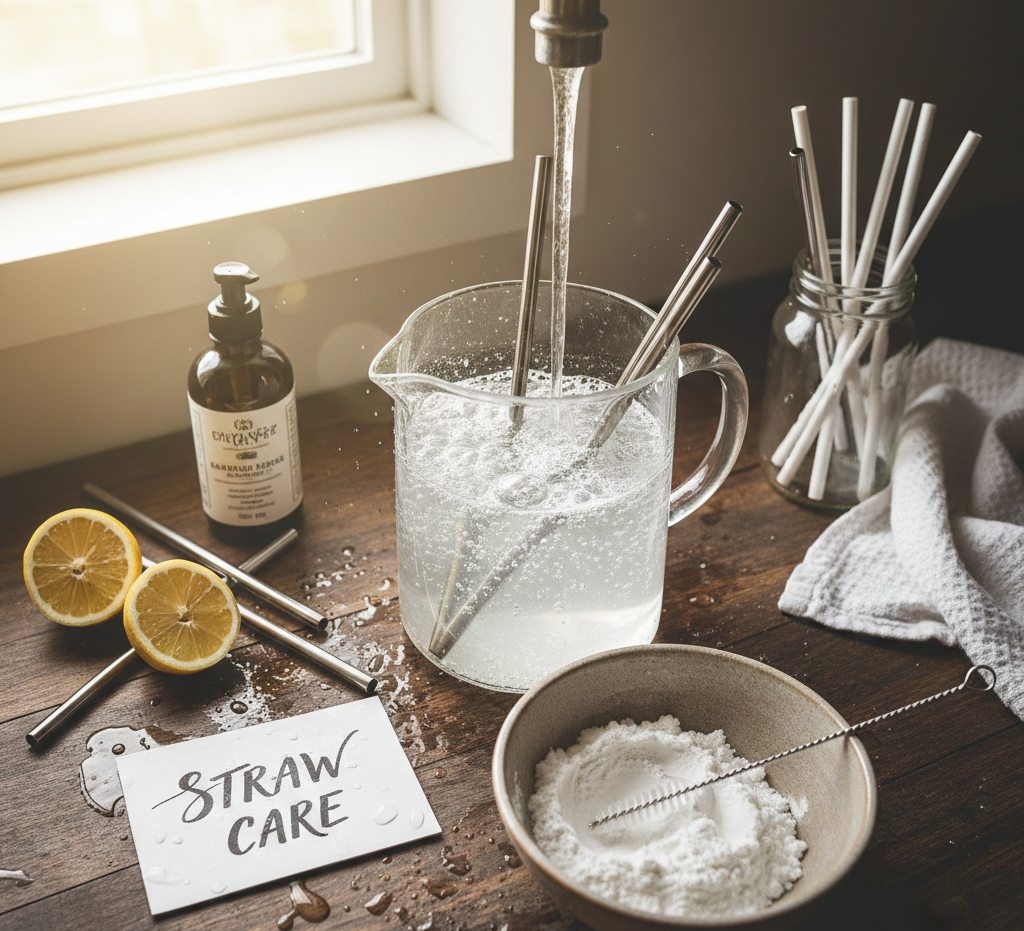
Scrub Your Straws to Perfection
Reusable straws save the planet. However, they trap hidden grime. You must clean them regularly to stay healthy. Most people ignore the inside of the tube. This leads to mold and bacteria growth. Do not let your eco-friendly habit become a health hazard.
Cleaning a straw seems tricky. You cannot see the dirt inside. Yet, you can master this task with ease. This guide shows you natural ways to keep straws fresh. Follow these steps for a sparkling clean sip every time.
Why Deep Cleaning Matters
First, think about what you drink. Smoothies leave thick residue behind. Coffee stains the inner walls quickly. Even water can cause biofilm buildup over time. Consequently, a simple rinse under the tap fails. You need friction to remove stubborn particles.
Furthermore, moisture creates a home for germs. Dark, damp tubes invite mold spores. You might inhale these toxins unknowingly. Therefore, deep cleaning is a vital safety step. You protect your body while protecting the Earth.
The Essential Cleaning Tools
Before you start, gather your supplies. You do not need harsh chemicals. Instead, look for a dedicated straw brush. These thin brushes reach every hidden corner. Most reusable sets include one for free.
Alternatively, you can use pipe cleaners. These work well for narrow glass straws. Make sure the bristles feel firm but flexible. In addition, keep a small jar handy. This helps you soak multiple straws at once. Proper tools make the job much faster.
Method 1: The Classic Soap and Water
Start with the most basic technique. First, wet your straw brush thoroughly. Apply a drop of natural dish soap. Then, slide the brush into the straw. Move it back and forth several times.
Moreover, ensure you scrub both ends well. Often, debris hides near the openings. After scrubbing, rinse the straw under warm water. Watch the bubbles disappear down the drain. Finally, hold it up to the light. Ensure no dark spots remain inside.
Method 2: The Baking Soda Paste
Sometimes, soap is not enough for stains. In that case, try baking soda. This natural powder acts as a mild abrasive. First, mix the powder with a little water. Create a thick, gritty paste.
Next, coat your cleaning brush in this mixture. Push the brush through the straw repeatedly. The grit will lift dried smoothie bits easily. Meanwhile, the soda neutralizes any sour smells. Rinse the tube with hot water afterward. This method leaves your straw looking brand new.
Method 3: The Vinegar Soak
Do you worry about invisible bacteria? Vinegar is your best natural friend. It kills most common household germs. First, fill a tall glass with white vinegar. Add some warm water to the mix.
Next, drop your straws into the liquid. Let them soak for twenty minutes. During this time, the acid breaks down minerals. This is perfect for hard water buildup. Afterward, give them a quick scrub with your brush. Rinse well to remove the vinegar scent. Your straws will shine like never before.
Method 4: The Boiling Water Bath
Use heat for the ultimate deep clean. However, check your straw material first. Stainless steel and glass handle heat well. Silicone might warp if the water is too hot. First, boil a small pot of water.
Then, carefully place the straws in the pot. Let them sit for five minutes. This heat sanitizes the surface completely. Subsequently, use tongs to remove them safely. Lay them on a clean towel to cool. This method provides total peace of mind.
Method 5: Lemon Juice Freshness
Citric acid works wonders on organic residue. Specifically, it tackles fruit stains from juices. First, squeeze a fresh lemon into a bowl. Dip your cleaning brush into the juice.
Then, scrub the interior of the straw vigorously. The acid cuts through grease and sugar. Additionally, your straw will smell like fresh citrus. This is a great chemical-free option. Rinse the straw with cool water afterward. You will enjoy a bright, clean taste.
Drying Your Straws Properly
Drying is the most important step. Many people skip this part entirely. Unfortunately, trapped water causes mold growth. Therefore, you must dry them vertically. Stand them up in a clean glass.
Make sure air circulates through the tube. Do not put them in a drawer yet. Instead, wait until they are bone dry. This usually takes a few hours. Proper drying prevents future cleaning headaches. Your patience ensures a safe drinking experience.
Cleaning Without a Brush
What if you lose your brush? Do not worry at all. You can still clean the straw. First, find a long piece of string. Tie a small knot in the middle.
Next, thread the string through the straw. Pull the knot through the center. The friction will scrape away some dirt. Additionally, you can use a dental flosser. Use a twisting motion to reach the sides. These tricks work well in an emergency. Always buy a replacement brush soon, though.
Maintenance Tips for Daily Use
Prevention makes cleaning much easier later. First, rinse your straw immediately after use. Do not let liquids dry inside. Even a quick water flush helps.
Second, avoid leaving straws in dirty cups. Bacteria move quickly from old drinks. Instead, place them in the sink right away. Furthermore, clean them at least once daily. This habit keeps buildup at a minimum. You will save time during deep cleans. Small steps lead to big results.
| Frequency | Item to Clean | Natural Cleaning Agent |
| Daily | Reusable Straws | Dish soap or lemon juice |
| Daily | Coffee Maker Parts | Warm water and soap |
| Weekly | Kitchen Sponges | Boiling water or microwave |
| Weekly | Reusable Water Bottles | Baking soda and warm water |
| Monthly | Dishwasher Interior | White vinegar cycle |
| Monthly | Refrigerator Shelves | Diluted vinegar spray |
| Quarterly | Oven Interior | Baking soda paste |
Selecting the Right Straw
Different materials require different care. For example, glass straws show dirt clearly. You can see exactly where to scrub. Conversely, metal straws hide grime inside. You must be more thorough with steel.
Also, consider the width of the straw. Wide straws are much easier to clean. Narrow straws require more delicate brush work. Choose a style that fits your lifestyle. If you hate cleaning, go for glass. If you travel, choose durable stainless steel.
Final Thoughts on Straw Care
Cleaning your straws protects the environment. It also protects your personal health. Natural methods are safe and very effective. You do not need toxic cleaners. Simple pantry items work the best.
Stay consistent with your cleaning routine. Your straws will last for many years. You will enjoy every sip with confidence. This small task makes a big difference. Keep your straws clean and stay hydrated.
Leave a Reply