
How to Clean a Front-Load Washer: 5 Easy Steps to Kill Smells and Mold
Stop the Stink: How to Deep Clean Your Front-Load Washer
You open your washing machine to grab fresh clothes. Instead of a “mountain breeze,” a swampy odor hits your face. Your clean laundry now smells like old gym socks. Do not panic. You did not buy a broken machine. Front-load washers trap moisture by design. This moisture invites mold and mildew to grow inside the hidden crevices.
You can fix this problem today. I will show you how to scrub away the grime. Follow these steps to make your laundry room smell fresh again.
Why Does My Front-Loader Smell?
Front-loaders use less water and energy than top-loaders. However, the rubber door seal acts like a dam. It keeps water inside during the cycle. Unfortunately, it also traps hair, lint, and soapy residue. This “scrub” or biofilm feeds bacteria.
Furthermore, many people use too much detergent. High-efficiency (HE) machines only need two tablespoons of soap. As a result, excess suds coat the outer drum. Consequently, the drum becomes a breeding ground for funky smells.
Gather Your Cleaning Supplies
You do not need expensive chemicals to fix this. Instead, look in your pantry first. You likely have everything required for a deep clean.
- White Vinegar: This cuts through hard water and odors.
- Baking Soda: This acts as a gentle abrasive.
- Microfiber Cloths: Use these to wipe away slime.
- An Old Toothbrush: This reaches tight corners and grooves.
- Bleach (Optional): Use this for extreme mold cases.
Pro Tip: Never mix vinegar and bleach. Indeed, this combination creates toxic chlorine gas. Pick one method and stick to it.
Step 1: Scrub the Rubber Gasket
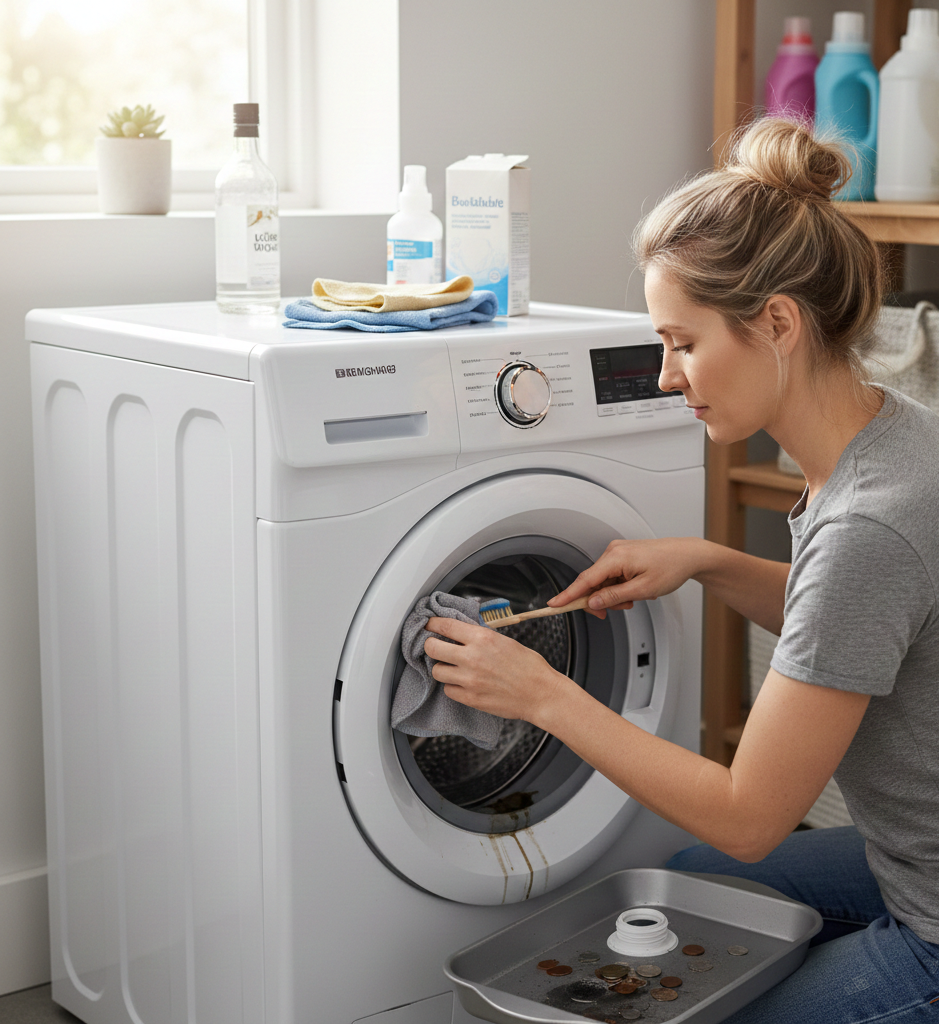
The rubber door seal is the primary culprit. In fact, it usually hides a layer of gray sludge. Pull back the folds of the rubber carefully.
First, spray the area with white vinegar. Let the liquid sit for ten minutes. Afterward, wipe the seal with a clean cloth. Use your toothbrush to scrub the drainage holes. You will likely find hair and coins trapped there. Finally, dry the area completely with a fresh towel.
Step 2: Clean the Detergent Drawer
Soap buildup happens inside the dispenser drawer. Specifically, most drawers have a release button. Press it and pull the drawer out entirely.
Soak the drawer in a sink filled with warm soapy water. Meanwhile, look inside the empty drawer cavity. You will see black spots or pink slime. Next, scrub the ceiling of the cavity with your toothbrush. Rinse the drawer and dry it before sliding it back in. Consequently, your fresh detergent will stay clean.
Step 3: Clear the Drain Pump Filter
Most front-load washers have a small door at the bottom. Moreover, this door hides the drain pump filter. This filter catches buttons, lint, and debris.
To begin, place a shallow pan or towel on the floor. Open the door and unscrew the filter slowly. Immediately, water will spill out. Clean the filter under a faucet to remove hair and slime. Additionally, reach into the pump housing to check for obstructions. Screw the filter back in tightly. By doing this, you prevent water from sitting and rotting.
Step 4: Run the Hot Cleaning Cycle
Now you must clean the internal drum. Naturally, you cannot reach this area with a cloth. Therefore, you must use a high-heat cycle.
- Pour two cups of white vinegar into the detergent drawer.
- Add half a cup of baking soda directly into the drum.
- Set the machine to the “Tub Clean” or “Sanitize” setting.
- Finally, select the highest water temperature available.
The vinegar breaks down mineral deposits. Meanwhile, the baking soda deodorizes the metal surfaces. In summary, this dual action kills the bacteria hiding behind the drum.
Step 5: Wipe the Exterior and Glass
Do not forget the outside of the machine. Certainly, dust and detergent spills attract grime. Wipe the control panel with a damp cloth. Also, clean the inside of the glass door. Hard water stains make the machine look old. However, a quick spray of vinegar restores the shine.
How to Prevent Future Odors
You cleaned the machine successfully. Now, you must keep it that way. Change a few simple habits to stop the smell from returning.
- Leave the Door Open: Always keep the door ajar after a wash. Consequently, the drum dries out completely.
- Remove Laundry Promptly: Never let wet clothes sit overnight. Clearly, moisture is the enemy of a fresh washer.
- Use HE Detergent: Only use soap with the “HE” logo. Otherwise, regular soap creates too many suds.
- Measure Your Soap: Stop guessing the amount of detergent. Instead, use a measuring cup every single time.
- Wipe the Gasket Regularly: Keep a dry cloth near the washer. Simply wipe the seal after your last load.
When to Call a Professional
Sometimes, a deep clean does not work. You might have a clog deep in the internal drain lines. Or, the mold might live in the outer tub assembly. If the smell persists, call a technician. Admittedly, they must disassemble the machine to reach the hidden buildup. Nevertheless, these steps solve the issue for most owners.
Summary Table: Monthly Maintenance Checklist
| Task | Frequency | Purpose |
| Wipe Gasket | After every load | Prevents mold growth |
| Leave Door Ajar | Always | Improves airflow |
| Clean Filter | Monthly | Prevents drainage issues |
| Run Tub Clean | Monthly | Sanitizes the inner drum |
| Wash Soap Drawer | Monthly | Removes biofilm |
Final Thoughts
A smelly washer is a common frustration. Fortunately, you can take control of your appliance. Consistency is the secret to a fresh laundry room. Therefore, perform these steps once a month. As a result, your clothes will always smell amazing. You spent a lot of money on your washer. So, treat it well so it lasts for years.
Leave a Reply