
How to Remove Oil Stains from Clothes: 5 Proven Grease Removal Hacks
Tackling Tough Grease Stains on Your Favorite Clothes
Accidents happen during every delicious meal or car repair session. You suddenly notice a dark, slick spot on your brand-new shirt. Panic usually sets in immediately when oil hits delicate fabric. However, you can save your wardrobe with the right techniques. This guide provides a complete roadmap for removing stubborn grease effectively.
Act Fast for Better Results
Speed determines your success rate when dealing with oily spills. Fresh stains lift away much easier than old, set-in messes. Therefore, you must grab a clean paper towel right away. Gently blot the excess oil without rubbing the fibers. Rubbing actually pushes the liquid deeper into the weave of the cloth. Afterward, find some absorbent powder like cornstarch or talcum powder. Sprinkle a thick layer directly onto the affected area. This substance draws out the moisture before it bonds with the threads. Let the powder sit for at least fifteen minutes. Consequently, the white particles will turn yellow as they soak up the grime. Shake the garment outside to remove the dirty clumps.
Gather Your Essential Cleaning Supplies
Preparation makes the actual scrubbing process much smoother for you. Most necessary items already hide inside your kitchen cabinets or bathroom.
| Item | Purpose |
| Dish Soap | Cuts through heavy grease molecules instantly. |
| Baking Soda | Absorbs liquid and provides gentle abrasion. |
| Toothbrush | Reaches deep into the fabric grain. |
| White Vinegar | Breaks down chemical bonds in old stains. |
| Cardboard | Prevents the stain from bleeding to the back. |
Check your labels before applying any strong chemicals to the material. Certain fabrics like silk require much more delicate handling than cotton.
The Power of Liquid Dish Soap
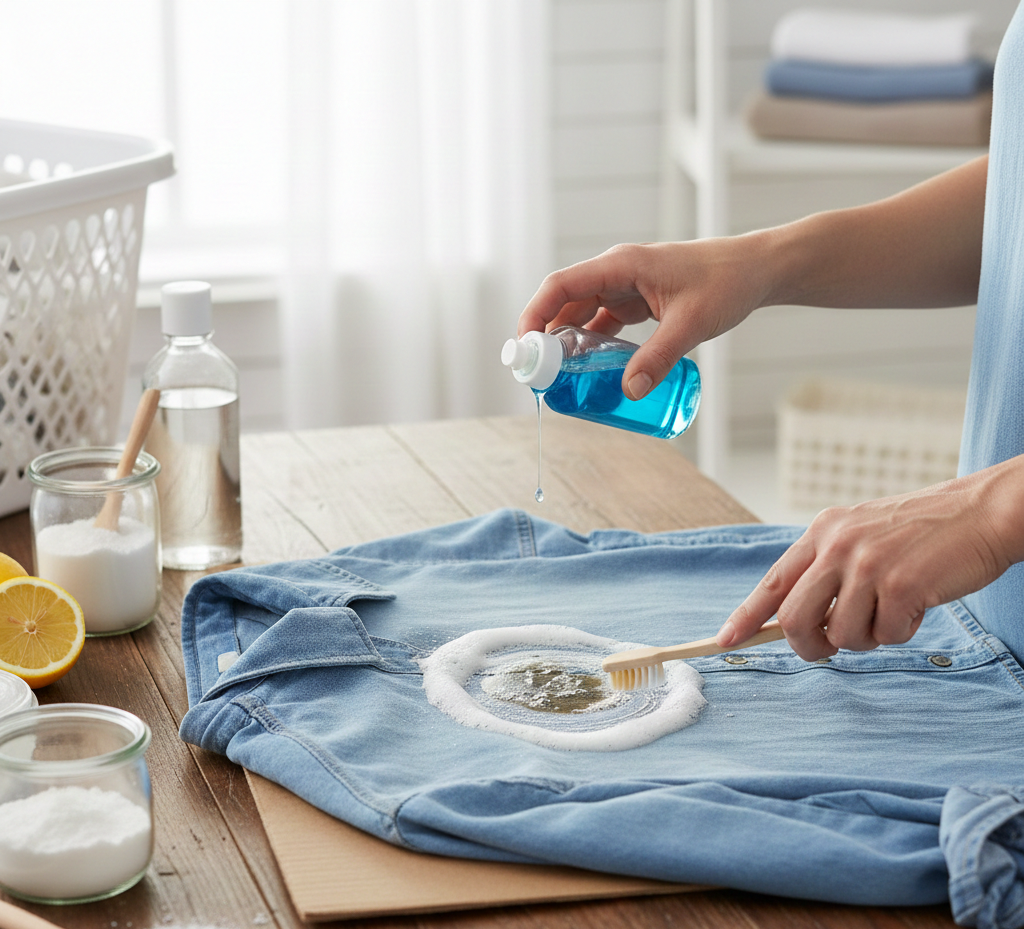
Engineers design dish soap specifically to break apart stubborn food oils. Because of this, it remains your best weapon against most clothing stains. Place a piece of cardboard inside the shirt first. This barrier stops the oil from transferring to the other side. Next, apply a small drop of concentrated soap to the spot. Use your fingers to spread the suds across the entire blemish. Then, grab a soft toothbrush to work the soap into the cloth. Move the brush in small, circular motions for sixty seconds. Scrubbing creates a lather that traps the grease particles. Allow the garment to rest for about half an hour. During this time, the surfactants begin to dissolve the oily bonds. Rinse the area with the hottest water the fabric allows.
Dealing with Stubborn or Set-In Stains
Sometimes you discover a grease spot after the dryer cycle finishes. Heat usually locks the oil into the fibers permanently. Despite this challenge, you can still attempt a rescue mission. Start by re-saturating the dried area with a bit of WD-40. While this sounds counterintuitive, the solvent helps loosen the old oil. Wait five minutes for the chemical to penetrate the threads. Immediately follow this step with a heavy application of baking soda. The powder will clump up as it reacts with the solvent. Use a dull knife to scrape away these dirty chunks carefully. Repeat the dish soap scrubbing method mentioned in the previous section. Finally, soak the entire item in a mixture of warm water and vinegar. This acidic bath lifts any remaining residue from the deep layers.
The Importance of Water Temperature
Heat plays a vital role in moving oil out of synthetic materials. Conversely, cold water often causes grease to solidify and stay put. Always check the care tag for the maximum safe temperature. If the tag says “Warm,” use the highest setting available on your machine. Hot water keeps the oil in a liquid state during the wash. Consequently, the detergent carries the grime away into the drain. However, avoid boiling water for delicate items like spandex or lace. Extreme heat might shrink your clothes or damage the elastic fibers.
Inspecting Your Progress
Never toss a treated garment into the dryer without a close inspection. The high heat of a dryer acts like an oven for stains. If the spot remains, the dryer will bake it in forever. Instead, let the clothing air dry after the initial wash cycle. Examine the fabric under bright, natural light once it feels dry. Look for any lingering shadows or darkened patches on the surface. If you still see the mark, repeat the cleaning steps again. Persistence often pays off when dealing with heavy industrial lubricants or butter.
Natural Alternatives for Sensitive Skin
Perhaps you prefer to avoid harsh chemicals or synthetic scents. Lemons offer a fantastic natural way to combat greasy messes. Squeeze fresh lemon juice directly onto the oily patch. The citric acid acts as a natural degreaser for organic oils. Additionally, plain white chalk works wonders for small splatters on silk. Rub the chalk over the area to absorb the oils quickly. Brush away the white dust after several hours of sitting. Most people find that simple club soda also helps loosen fresh spills. The carbonation lifts the particles to the surface for easier blotting.
Professional Help for Dry Clean Only Items
Certain expensive suits or dresses cannot handle a water-based cleaning. Attempting a home remedy on dry-clean-only silk often leaves permanent water rings. Therefore, take these items to a professional cleaner as soon as possible. Point out the exact location of the grease to the staff. Mention what type of oil caused the damage if you know. This information helps them choose the correct solvent for the job. Professionals use specialized pressurized systems that remove oil without damaging fragile structures.
Preventing Future Accidents
Protecting your wardrobe starts with a few simple, proactive habits. Wear an apron while cooking bacon or using olive oil. These tasks generate tiny droplets that travel surprisingly far through the air. Tuck a napkin into your collar when eating messy finger foods. Furthermore, keep a portable stain remover pen in your bag or car. These tools contain concentrated surfactants that stop stains from setting during the day.
Final Thoughts on Fabric Care
Treating grease requires patience and the right chemical approach. You should never feel discouraged by a single oily mishap. Most stains disappear if you use the correct tools and timing. Remember to blot instead of rubbing to protect the fabric integrity. Always verify that the spot vanished before using the clothes dryer. With these tips, your wardrobe will stay looking sharp and clean.
Leave a Reply