
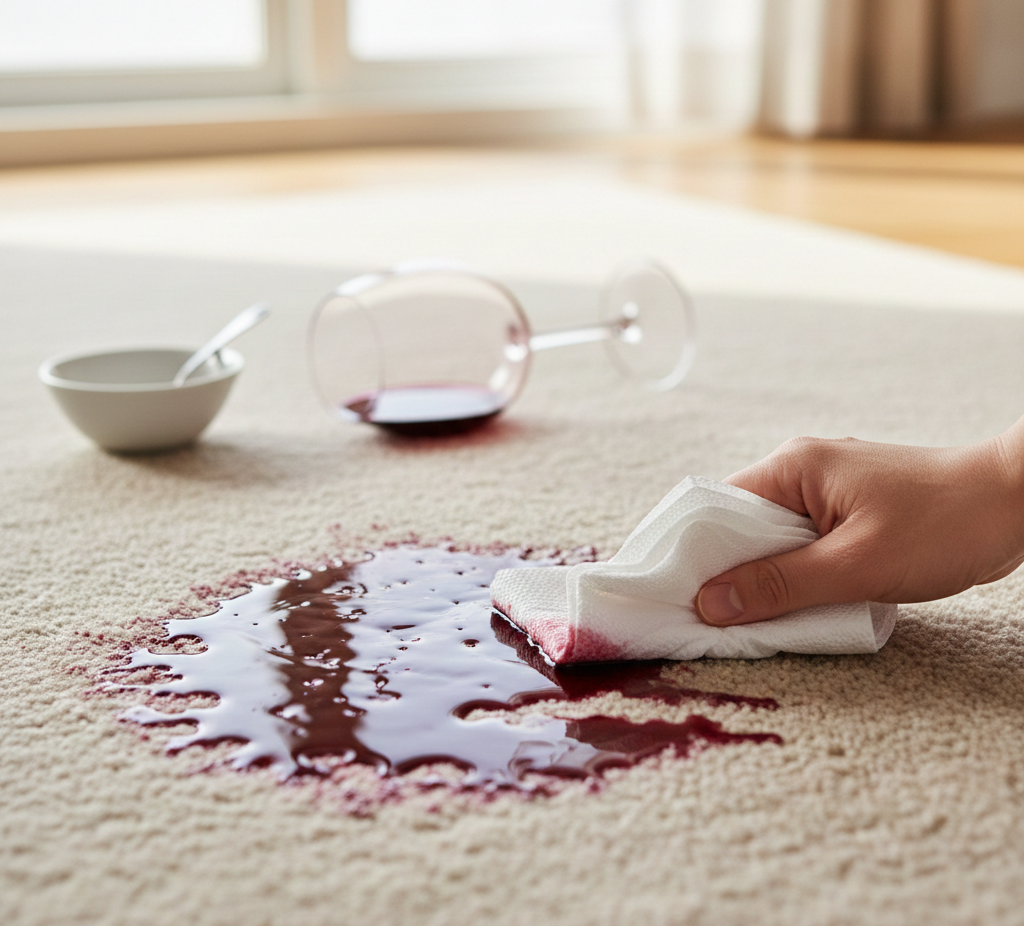
How to Remove Red Wine Stains from Carpet: 5 Fast & Easy DIY Fixes
You just spilled a glass of Merlot on your favorite cream-colored rug. Your heart sinks as the deep crimson liquid seeps into the fibers. Do not panic yet. You can save your carpet with quick action and the right techniques. Most people ruin their carpets because they scrub the spot too hard. Instead, you must follow a careful process to lift the pigment safely. This guide covers every step to erase that stubborn red wine blotch forever.
Act Fast: The Golden Rule of Stain Removal
Time acts as your greatest enemy when red wine hits the floor. Red wine contains tannins that bond quickly with porous carpet fibers. Because of this, you must treat the spill immediately before it dries. Once the liquid sets, the removal process becomes significantly more difficult. Grab a clean white cloth or a stack of paper towels right away. You should always use white materials to avoid transferring dye from the cloth to the rug.
1. Blot, Never Scrub
Start by blotting the spill with firm, downward pressure. You want to absorb as much liquid as possible before it travels deeper. However, you must avoid rubbing the stain at all costs. Rubbing pushes the wine further into the padding and spreads the mess outward. Instead, work from the outside of the spill toward the center. This technique prevents the stain from expanding into a larger circle. Continue blotting until no more red pigment transfers to your cloth.
2. The Power of Cold Water
Next, apply a small amount of cold water to the affected area. Cold water helps dilute the remaining wine without setting the stain. Be careful not to drench the carpet, as excess moisture can lead to mold. After applying the water, blot the area again with a fresh towel. You will notice more color lifting onto the fabric. Repeat this cycle until the stain looks much lighter than before.
Home Remedies That Actually Work
You likely have powerful cleaning agents sitting in your pantry right now. Many household items work just as well as expensive chemical cleaners.
The Salt Method
Salt serves as a fantastic absorbent for fresh wet stains. First, cover the damp area with a generous layer of table salt. The salt crystals will draw the liquid upward through capillary action. Consequently, you will see the white salt turn pink or purple as it works. Leave the salt on the carpet for several hours or even overnight. Once the salt dries completely, vacuum the area thoroughly to reveal a cleaner surface.
The Vinegar and Dish Soap Solution
If the stain persists, try mixing a DIY cleaning solution. Combine one tablespoon of liquid dish soap with one tablespoon of white vinegar. Then, add two cups of warm water to the mixture. The vinegar breaks down the tannins while the soap lifts the oils. Dampen a cloth with this solution and dab the stain gently. Afterward, blot with a dry towel to remove the liquid and the lifted pigment.
The Baking Soda Paste
Baking soda works wonders on lingering odors and stubborn pigments. Mix three parts baking soda with one part water to create a thick paste. Spread this paste over the red wine spot and let it dry. As the paste hardens, it pulls the remaining wine out of the fibers. Finally, vacuum the dried paste to see your results.
Advanced Solutions for Dried Stains
Sometimes you do not notice a spill until the next morning. Dried red wine requires a more aggressive approach to break the chemical bonds.
Hydrogen Peroxide and Soap
Hydrogen peroxide acts as a mild bleach that targets organic pigments. Mix one part dish soap with two parts hydrogen peroxide in a small bowl. Test this mixture on a hidden corner of your carpet first. Some carpets may lose their color if the peroxide is too strong. If the test looks good, apply the mixture to the dried stain. Let it sit for twenty minutes to penetrate the fibers deeply. Finally, blot the area with a damp cloth to rinse the solution away.
Professional Carpet Cleaners
If home remedies fail, look for an enzyme-based carpet cleaner at the store. These products use specialized proteins to “eat” the organic material in the wine. Always follow the manufacturer’s instructions printed on the bottle carefully. Most commercial sprays require a short waiting period before you blot them up.
Critical Mistakes to Avoid
Even well-meaning efforts can backfire if you use the wrong tools. Avoid these common pitfalls to keep your carpet in top shape.
- Avoid Hot Water: Heat sets the stain permanently into the fabric fibers.
- No Circular Motion: Moving in circles spreads the wine to clean areas.
- Don’t Over-Saturate: Too much liquid can damage the floorboards underneath.
- Skip the Bleach: Standard bleach will ruin the color of most carpets instantly.
When to Call the Professionals
Sometimes a spill is simply too large for a DIY fix. If you spilled an entire bottle, you might need a professional steam cleaner. Professionals use high-pressure extraction to pull liquid from the deep padding. They also have access to industrial-strength chemicals that remain safe for home use. If your carpet is silk or antique wool, call a specialist immediately. These delicate materials require specific care that standard household methods might ruin.
Summary Table: Quick Action Guide
| Step | Action | Why? |
| 1 | Blot with a white towel | Absorbs liquid without spreading. |
| 2 | Add cold water | Dilutes the wine pigment. |
| 3 | Apply salt or baking soda | Draws moisture out of fibers. |
| 4 | Use vinegar solution | Breaks down the chemical bonds. |
| 5 | Vacuum | Removes dried residue and salt. |
Final Thoughts on Carpet Care
A red wine spill feels like a disaster, but it is manageable. You can protect your investment with patience and the right household items. Remember to stay calm and keep blotting until the color disappears. Most stains will vanish if you treat them with the respect they deserve. Now you can host your next dinner party with total confidence.
Leave a Reply