How to Deep Clean Carpet Without a Machine: 5 Easy DIY Steps
repare Your Workspace
First, clear the room of all furniture and obstacles. You need a completely open floor to work effectively. Small items like rugs or toys will only get in your way. Additionally, move any floor-length curtains to prevent dampness.
Next, perform a very thorough vacuuming of the entire area. Move the vacuum slowly to pull up deep-seated grit. Go over each section in multiple directions. Consequently, this step removes loose debris before you add any moisture. Otherwise, you will just turn dry dust into sticky mud. Furthermore, professional cleaners suggest vacuuming twice for the best results.
The Ultimate DIY Cleaning Solution
You do not need expensive chemicals for this process. In fact, natural ingredients often work better on delicate fibers. Mix a solution of warm water and clear dish soap. Then, add a small amount of white vinegar to the blend. Vinegar kills bacteria and neutralizes unpleasant odors naturally. Moreover, it helps maintain the original color of the yarn.
The Standard Ratio
| Ingredient | Amount |
| Warm Water | 1 Gallon |
| Clear Dish Soap | 1 Tablespoon |
| White Vinegar | 1 Cup |
However, avoid using colored soaps to prevent accidental staining. Test this mixture on a small, hidden corner of the carpet first. Afterward, check for any color fading or fiber damage. If the area looks good, you are ready to proceed. Thus, you ensure your carpet remains safe throughout the process.
Scrubbing Like a Pro
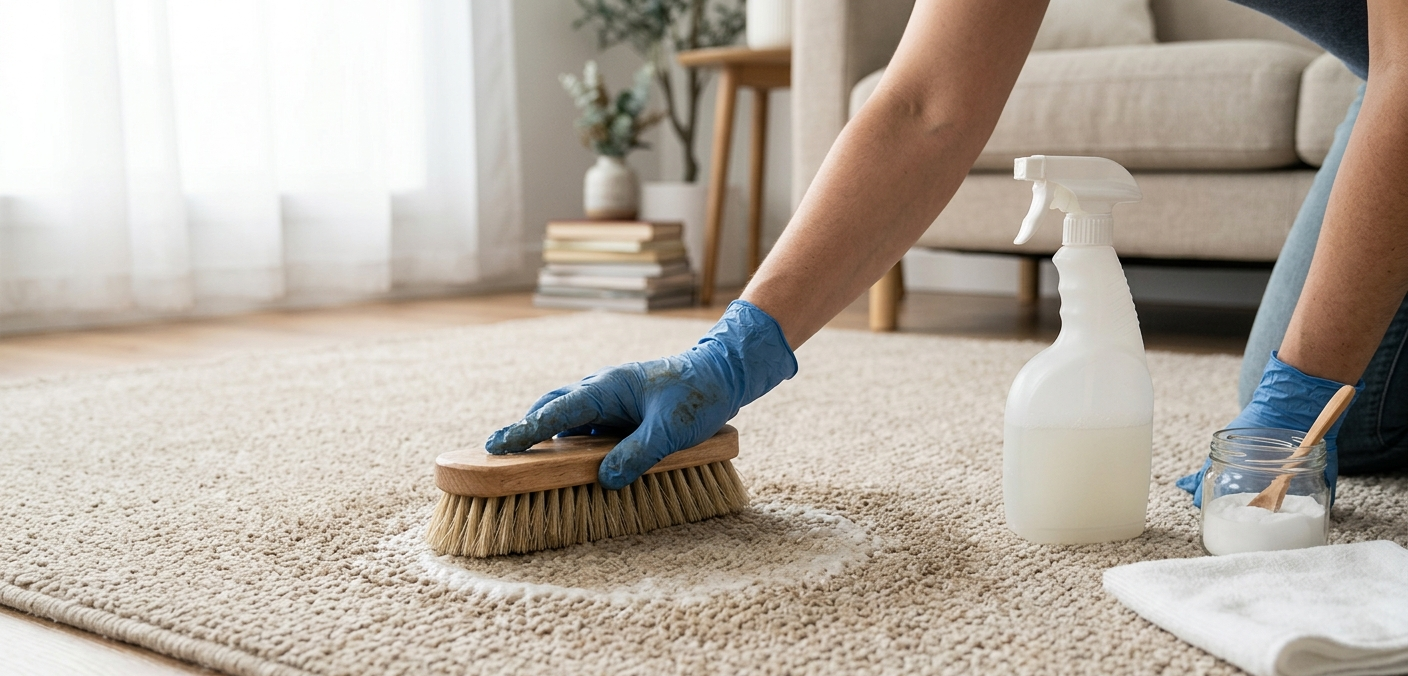
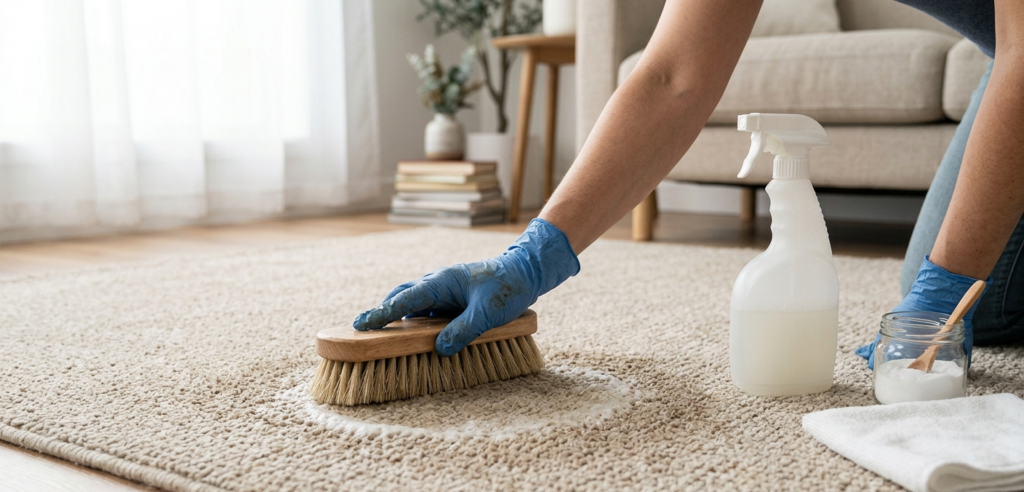
Grab a stiff-bristled brush or a clean microfiber cloth. Dip your tool into the solution but do not soak it. Specifically, you want the brush damp rather than dripping wet. Excess water can lead to mold growth under the carpet padding. Therefore, squeeze out all extra liquid before touching the floor.
Start at the furthest corner and work toward the door. In this way, you do not trap yourself in the room. Apply the solution using firm, circular motions. As a result, you lift the dirt from the base of the fibers. Scrubbing in circles agitates the pile and breaks up stubborn oils.
Meanwhile, focus on high-traffic areas where feet compress the fibers. You might notice the water turning grey or brown. Clearly, this change means the process is working effectively. Nevertheless, change your cleaning water frequently to avoid spreading old grime around.
Targeted Stain Removal
Sometimes, specific spots require extra attention. Sprinkle a generous layer of baking soda over tough stains. Consequently, the powder absorbs odors and helps lift pigments. Next, spray a light mist of vinegar over the baking soda. The resulting fizzing action deepens the cleaning power significantly.
Subsequently, let this mixture sit for at least thirty minutes. Then, blot the area with a clean, dry white towel. Never rub a fresh stain, as rubbing pushes it deeper. Instead, press down firmly to pull the liquid upward. Repeat this process until the towel comes away clean.
The Rinsing Phase
Rinsing represents a vital but often skipped step. Basically, residual soap acts like a magnet for future dirt. Fill a fresh bucket with plain, cool water. Next, use a clean cloth to “wash” the carpet again.
Moreover, this step removes the sticky soap film. Use as little water as possible during this phase. Essentially, you want to neutralize the fibers without saturating the floor. Finally, blot the entire surface again with dry towels to finish.
Accelerating the Drying Process
Drying your carpet quickly prevents mildew and smells. To start, open all the windows to create a cross-breeze. Turn on ceiling fans or place floor fans around the room. Additionally, a dehumidifier helps pull moisture from the air.
In the meantime, keep pets and children off the carpet. Walking on damp fibers crushes them and leaves new marks. Usually, the drying process takes six to twelve hours. Above all, be patient to ensure the best possible results.
Reviving the Carpet Pile
Once dry, your carpet might feel a bit stiff. Use a clean, dry brush to “groom” the fibers. By doing this, you restore the original texture and fluffiness. Finally, vacuum the entire room one last time.
This final pass removes any dried baking soda or loosened debris. Consequently, your carpet will look vibrant and smell fresh. In summary, you saved money and avoided harsh industrial chemicals.
Maintenance Tips for Longevity
- Vacuum at least twice every week.
- Remove shoes at the front door.
- Treat spills immediately with club soda.
- Also, rotate furniture to prevent permanent indentations.
Why Avoid Machines?
Traditional steam cleaners use massive amounts of water. Often, they leave the carpet soggy for several days. Hand-cleaning allows for precision and prevents over-saturation. Furthermore, you control exactly what ingredients touch your home.
Ultimately, you now possess the skills to maintain a pristine home. Deep cleaning does not require a motor or a rental fee. So, use these techniques twice a year for the best results. Your floors will thank you for the extra care.
Leave a Reply